
Drag Racing 1/4 Mile times 0-60 Dyno Fast Cars Muscle Cars

Rolls Royce Griffon Mk 58 Engine being fired up

A Rolls Royce Griffon Mk 58 Engine being fired up at the Woodvale Show UK 2007 - Turn up the sound !!


More Videos...


EXPLOSION - Rolls-Royce Griffon MK 58
Blue Griffin, Rolls-Royce Griffon, 37 liter V12.


ROLLS ROYCE merlins
http://facebook.com/TVFakery http://spiney.me.uk http://seofollow.net raf aircraft In 1936, the Air Ministry had a requirement for a new fighter aircraft with airspeeds that would eventually have to be over 300 mph (480 km/h). Fortunately, two designs had been developed entirely as private venture exercises: the Hawker Hurricane and Supermarine Spitfire. Both were designed around the PV-12 instead of the Kestrel, and were the only British modern fighters to have been so developed. Production contracts for both aircraft were let in 1936. The PV-12 was instantly catapulted to the top of the supply chain and became the Merlin. Early Merlins were considered to be rather unreliable, but Rolls soon introduced a superb reliability-improvement programme to improve matters. This consisted of taking random engines from the end of assembly line and running them continuously at full power until they failed. Each was then dismantled to find out which part had failed, and that part was redesigned to be stronger. After two years of this, the Merlin had matured into one of the most reliable aero engines in the world, and could be run at full power for eight-hour bombing missions with no problems. As it turned out, the Peregrine saw use in only two aircraft, the Westland Whirlwind and the Gloster F9/37. Although the Peregrine appeared to be a satisfactory design, it was never allowed to mature; Rolls-Royce's priority was troubleshooting the Merlin. The Vulture was fitted to the Hawker Tornado and Avro Manchester, but proved unreliable owing to big-end failures caused by lubrication problems. With the Merlin itself soon pushing into the 1,500 hp (1,100 kW) range, the Peregrine and Vulture were both cancelled in 1943. upgrades to the Merlin were the result of ever-increasing octane ratings in the aviation fuel available from the US, and ever more efficient Supercharger designs. At the start of the war the engine ran on the then-standard 87 octane aviation spirit and The next major version was the XX which ran on 100 octane fuel. This allowed it to be run at higher manifold pressures, which were achieved by increasing the "Boost" from the centrifugal type Supercharger. The result was that the otherwise similar engine delivered 1,300 hp (970 kW). The process continued, with later versions running on further-increased octane ratings, delivering higher and higher power ratings. By the end of the war the "little" engine was delivering over 1,600 hp (1,200 kW) in common versions, and as much as 2,070 hp (1,544 kW) in the Merlin 130/131 versions used on the de Havilland Hornet. The Merlin was running on 150 Octane fuel by the time it was used in the Lancaster bomber. This high octane rating was achieved by large quantities of lead anti-knocking agent, so much in fact, that the engine cowlings around the Exhaust outlets were usually heavily stained with it. It had to be regularly removed for aerodynamic, not to mention weight, reasons. The Merlin's lack of direct fuel injection meant that both Spitfires and Hurricanes were, unlike the contemporary Bf-109E, unable to nose down into a deep dive. This meant the Luftwaffe fighters could 'bunt' into a high-power dive to escape attack, leaving the Spitfire spluttering behind as its fuel was forced by negative 'g' out of the carburettor. RAF fighter pilots soon learned to 'half-roll' their aircraft before diving to pursue their opponents. The use of uninjected carburettors was calculated to give a higher specific power output, due to the lower temperature, and hence the greater density, of the fuel/air mixture, compared to injected systems. "Miss Shilling's orifice" (invented in March 1941 by a female engineer named Shilling), a holed diaphragm fitted across the float chambers, went some way towards curing the fuel starvation in a dive. Further improvements were introduced throughout the Merlins, with injection introduced in 1943. http://badgers.wq2rx.com http://buzzbeeman.com wq4rx!! http://wq2rx.com http://junkie.wq2rx.com http://robinhood.wq2rx.com http://huddersfield.wq2rx.com http://outlaw.wq2rx.com http://ghost.wq2rx.com http://disdroid.co.uk


Low Spitfire Pass
Spitfire makes a low pass!! PLEASE RATE!


Cold Start Wright Cyclone R-1820 from a Boeing Vertol 44A
1425 hp 9 cyl Radial starts after a long cranking.


9 Cylinder Radial Engine Start And Run - Sternmotor läuft
Dieser Film ist ein kleiner Ausschnitt aus meiner DVD "Stationärmotorentreffen Burkhardtsdorf". In diesem Teil sieht man den Start und den Lauf eines 9 Zylinder Sternmotor.


engine start ,Wright Cyclone and RU19A-300


Supermarine Spitfire AWESOME SOUND !!!
Die Französische ,Griffon motorisierte, Spitfire MK19 beim Schauflug über der Hahnweide !


Spitfire Crash, Auckland New Zealand
Audio courtesy Ermine at www.freesound.org Spitfire aircraft crash landing.


24V71 Detroit
This is our 24 cylinder Detroit that we are putting in a custom 359 Peterbilt. It will use an Allison Transmission, and the engine will be in the front of the truck. We are starting off with 40 foot 4" X 14" rectangle rails, not sure how long it will end up being.


USA EAST Big Rigs Pulling Series, Crawford County Fair. Meadville, PA
USA East brings the big rigs pulling series to the Crawford County Fair in Meadville Pennsylvania. 5 trucks competed for a $7,000 purse...


Leopard 2 tank vs max weight sled
After a easy full pull earlier that day, the 60 ton Leopard 2 tank was challenged to pull the max weight of the sled, all 21 tonnes of it! The 48 liter, V12 turbodiesel engine producing 1500hp and 4700nm had no problem with it. Listen to the sheer power of that engine!


Spitfire OUV. A Truly Emotional Start-Up. www.ml407.co.uk
See: http://www.ml407.co.uk Nick Grace bought the 2 seat Spitfire in 1979 in a dismantled state and after 5 years of work took off with his wife Carolyn on their first flight. Apart from the substantial task of general re-assembly the fuselage and wings were essentially as they left the factory but a large amount of the work involved stripping back to bare metal and re-riveting after treatment with modern anticorrosives which is why OUV is still operational today with no corrosion. Tragically Nick was killed in a car accident in 1988 but his widow continues to fly OUV. This short clip is taken from the film "Perfect Lady" which covers the full story of OUV's restoration. It and other videos are available from Carolyn's website with all profits going to maintain the Spitfire in flying condition.


Engine Failure
Engine Failure due to bird strike. With Radio telephony. Boeing 757. Not filmed by me.


v-12 gas 3,200 cubic inch engine
a climax v-12 with a 7 inch bore and stroke 270 cubes per cylinder was used for pumping water in michigan in saginaw there was six and this is number 6 1 gallon of fuel per minute 15,380 lbs and 30 gallons of oil for the crankcase and four zeinth carberators = fun :) and please check out my other videos of cold starts i just added along with the others thanks!!!


Hüttlin Kugelmotor
Kugelmotor


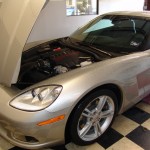
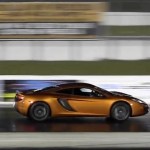
Which car is faster? Which Car is Faster?


Similar 1/4 mile timeslips to browse:

1967 Dodge Coronet 500: 10.717 @ 126.720
David Fishgold, Engine: 500 cubic inch Indy Mopar Racing Block, Tires: M/T 28 x 10.5


1966 Dodge Coronet : 11.060 @ 121.000
George Germann, Engine: 440, Tires: moroso


2007 Triumph Tiger 1050 ABS: 11.911 @ 117.085
Platypus,


1969 Dodge Coronet Super Bee: 12.070 @ 116.370
Harry Chargois, Engine: LOW DECK MOPAR STROKER, Tires: Firestone G70X14


1970 Dodge Coronet 2 door hardtop: 12.245 @ 113.590
Bob, Engine: 469 big block Chrysler with EFI, Tires: BF Goodrich 275/50R15 drag radials


1966 Dodge Coronet 440: 12.368 @ 110.050
P Webb, Engine: 440, Tires: hoosier quick time 10.5in


1966 Dodge Coronet 440: 12.617 @ 107.970
Phil Hudlow, Engine: Dodge 440, Tires: Good Year 29x12 on the rear and 28x4.5 up front


1966 Dodge Coronet 440: 12.617 @ 108.430
Phil Hudlow, Engine: Dodge 440, Tires: Goodyear 29x12 & 28x4.5


1992 Mercedes-Benz 500E : 12.794 @ 110.820
Justin Poole, Engine: 5.0L M119, Tires: Nitto 555R @ 15 PSI


2003 Mercury Mountaineer AWD: 13.110 @ 100.960
Matt, Engine: 4.6, Turbos: Precision 61 mm


1993 Mercedes-Benz 500E : 13.195 @ 107.160
Gerry Van Zandt, Engine: M119,


1969 Dodge Coronet 440: 13.340 @ 102.740
todd, Engine: 360, Tires: nitto 555


1993 Mercedes-Benz 500E : 13.355 @ 108.110
Carl G., Tires: 275/35


1970 Dodge Coronet Superbee: 13.420 @ 102.300
Todd Lewis, Engine: 440, Tires: 15/50's


1968 Dodge Coronet : 13.490 @ 106.800
Me,


1993 Mercedes-Benz 500E : 14.453 @ 96.730
Carl G., Tires: 275/35


2003 Mercury Mountaineer : 16.180 @ 82.490
Matt, Engine: 4.6,


©2013 DragTimes - Disclaimer